Türkçe
 Español
 Français
 日本語
 हिन्दी
 العربية
 中文
Sheikh Muhammed Diyauddin – Hazrat
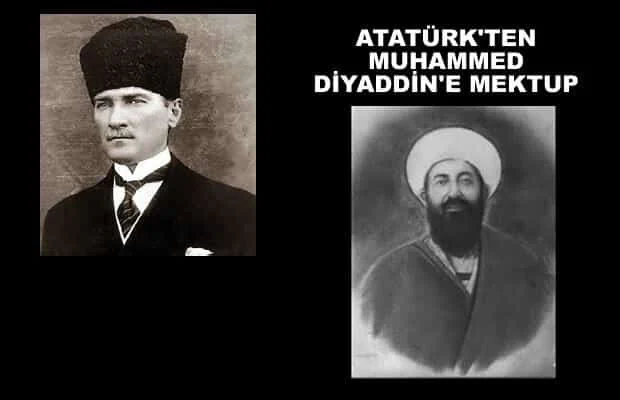
Hazrat Muhammed Diyâuddin (k.s.), known by the epithet Hazrat, was born on Thursday afternoon, 7 Jumada al-Akhira 1272 AH (14 February 1856 CE), in the village of Usb (Uvseb), attached to the district of Hizan in Bitlis.
His real name is Muhammed Diyauddin; he is widely known as Hazrat. This epithet was given to him by his teacher Sheikh Fethullah Verkanisi. His father is Sheikh Abdurrahman-et Tagi, known by the name Seyda-i Tagi (Tahi).(1)
Sheikh Abdurrahman Tagi had a total of 12 children, six boys and six girls. Hazrat is the eldest of all the children. During the childhood years of many of these children, their father Sheikh Abdurrahman Tagi had devoted himself entirely to the service of his sheikh Seyyid Sıbğatulah Arvasi, so for a long time he did not pay much attention to his family and children, and the members of the household suffered considerable hardship, want and distress.
So much so that when he was with his sheikh, to those who came from his own village and wanted to give him news of his home and children, he would say, "Do not tell me about the condition of my wife and children. By God, even if Diyauddin (Hazrat) has died, it would not make much difference to me," and did not give them the chance to tell of the poor condition of his family and children.(2)
Acquiring Knowledge
Hazrat, who passed his childhood in hardship, finally came to the age of study. The family circle of Muhammed Diyâuddin consisted of religious people. The noble scholars (ulama) of the time, who were authorities in the religious sciences, lived in his immediate surroundings.
Muhammed Diyâuddîn, who passed his childhood in an environment very suitable for acquiring outward and spiritual sciences, began his first education and teaching with his father Abdurrahman Tagi. He first received his regular madrasa education from Molla Mustafa el Halenzi el Bedevi in the village of Halenze. Then, together with his brother Abdurrahim, they began their studies with Sheikh Fethullah-ı Verkanisi. But distinct characteristics were seen between the two brothers. Hazrat's lesson would finish quickly, while his brother's lesson lasted quite long. Seeing the situation, some of the household would from time to time protest to Sheikh Fethullah: "You give Hazrat little and Abdurrahim much importance."
Sheikh Fethullah would say: "What can I do; Hazrat listens to the lessons normally, is convinced by what he has learned and finds what is given sufficient, so his lesson finishes quickly. As for Molla Abdurrahim, he asks many questions and forces us to answer, so his lessons are delayed." Continuing his studies in this way, Hazrat completed all his education with Sheikh Fethullah and received his certificate of knowledge (ijaza) from him as well.(3) Completing the lessons taught in the madrasas of his time, he attained the rank of molla.
Hazrat in the First World War:
The home of knowledge of Muhammed Diyauddin turned into a military organization when the Russians began to invade Eastern Anatolia. This person, who taught his students in peacetime, we see again in war as a commander at the head of his students. According to Hazrat, defense of the homeland comes above all sciences.
With the outbreak of the First World War, the Russians had entered the country; cities and villages had emptied and people had migrated. The province of Kars had already fallen into Russian hands, and the enemy had advanced as far as Muş and Bitlis.
Hazrat's participation in the First World War, he who was uncompromisingly bound to the sharia, is interesting. While the Russians were gradually pressing into the country from the eastern border, everyone began preparing for jihad, and word came to Hazrat as well to get ready. In those periods a certain amount of money was paid by those who did not do military service. Hazrat called his nephew Sheikh Masum, to whom he had given the economic affairs of his home and madrasa, and asked:
"How many students do we have here?"
Sheikh Masum:
"………. or so."
Hazrat:
"Prepare and send the fee of each one. For now we will not go to jihad!"
The money was prepared and sent at once. Then, when cold and famine appeared, Hazrat sent all the students to their hometowns. After a while the Russian advance increased, and now even Bitlis was under threat. At this point Hazrat called Sheikh Masum again and said:
"Send word to all the students, let them all gather and come. We will go out for jihad."
Sheikh Ma'sum:
"But sir, we had sent them their money. They are not obliged."
Here Hazrat gives his answer showing his extraordinary devotion to the Quran: "My son, I gave the first order so that it would be following (ittiba) the jihad verses of the Quran. Do you not know that all the jihad verses command jihad first with wealth and then with the self? Now the turn has come to our lives," he says. All the students gather at once; now it is the time for Hayye Alel Cihad.(4)
In this war Hazrat showed himself as he should have been and fulfilled the duty of jihad rightfully.
When the enemy approached, he moved his home from Çukur (Nurşin) to some villages in the Garzan region. One morning he came out of his house wearing a complete warrior's attire with his rifle in his hand and mounted his horse. From that moment on all the khalifas, students and murids began the war.
Hazrat (k.s.) showed great courage and a bravery not seen even among champions in this war. In order to attain the virtues of this war, Hazrat (k.s.) assigned the children of Seyda Tagi (k.s.) duties by rotation to take part in the war. Until the end of this war at least two persons were continuously in the war.
The Russians attacked from the side of Kalençgedük/Kılıç Gediği (between Bulanık and Malazgirt), but the soldiers of Hazrat (k.s.) prevented the Russians from coming from that side. Together with Hazrat (k.s.), his khalifas Sheikh Alaaddin (k.s.), Sheikh Ahmed el Haznevi (k.s.), Sheikh Mahmud-i Karaköy (k.s.), some of the children of the Seyda, Huyutlu Musa Bey and other aghas held trenches against the enemy at Kalençgedük.(5)
Every khalifa and agha took part in this war with his own tribe. While Sheikh Mahmud-i Zokaydi took part with his tribe in Garzan, Musa Bey (Huyut) also took part with his own tribe. Hazrat too took part together with his brothers and Sheikh Muhammed Alaaddin, Sheikh Mahmud-i Karaköyi and Sheikh Ahmed-i Haznevi around him. In those days they suddenly appeared before the Russians attacking the village called Kılıç Gediği and, after a fierce battle, prevented the unbeliever from entering the village. During these clashes Hazrat showed such heroism that his brother Muhammed Said, who had truly won fame among people for his heroism, said at that moment: "Hazrat took all the perfections from us; only heroism was left to us, and he took that from us too."
Sheikh Mahmud-i Karaköyi relates: "On some nights I would go out for guard duty. It was winter and there was severe cold. I always served Hazrat. One night he sensed this and said to me:
- What you are doing is a beautiful thing, it is a very good and great virtue. If I too could do this, I would do it just like you, but God (Exalted is He) knows that in this severe cold I do not have the strength to do as you do; you keep on doing it. May God (Exalted is He) reward you and us." All the khalifas of Hazrat (k.s.) took part in that war together with their own peoples and tribes. Indeed Sheikh Mahmud-i Zokaydi (k.s.) took part in the war together with the tribes in the Garzan area. During the war Hazrat's custom was as follows. First he himself would go to war and fight until he was exhausted, and when, exhausted, he came back, he would send one of his brothers so that the battlefield would not be left empty of his own family. During this war a sword was presented to Hazrat. Hazrat would gird that sword and go out to war in order to follow (mutaba'a) the Messenger of God (peace be upon him). Later someone stole this sword from him; after this event Hazrat was very grieved and would say: "With that sword we were making rabita with the Messenger of God (peace be upon him); after that sword was stolen, that rabita was lost." During the times when this sword was with him, Hazrat, in the talks he gave around him at night from time to time, would give many glad tidings of the unseen, and what he said would turn out exactly so. One of those glad tidings concerned the city of Kars, which until then was in Russian hands. He would say of this city: "God willing, Islamic soldiers will pray in congregation in the mosque of the city of Kars" — such was the glad tiding, and some time later what he said came true exactly, and Kars was taken from the enemy's hand.(6)
His brother, the martyr Sheikh Muhammed Said (k.s.), describes Hazrat's (k.s.) preparing for war, equipping weapons, mounting his horse and going against the enemy as follows:
"Hazrat (k.s.) had taken all the perfections from us. Only bravery and manliness were left to us, and he took that from us too," he said.
He would also say this:
"I say we will pray in the town of Kars." Here too we see the miracle of Hazrat (k.s.). Although the retaking of Kars seemed very difficult, Hazrat (k.s.) often said this. He was pointing to the retaking of Kars.
In this war his brothers, Sheikh Muhammed Said and Muhammed Eşref, became martyrs. May God Almighty (Exalted is He) have mercy on them, and may He not deprive us and all Muslims of their reward.
After the Russians occupied Muş and its plain, the home of Hazrat (k.s.) was moved to the village of Şeyhan (Çayarası). They stayed there until summer.(7)
Muhammed Diyauddin's next encounter with the Russians took place at Bulanık with the militia forces he had formed from his own students and citizens of nearby villages. When the Russians besieged Bulanık before coming to Bitlis and Muş, Muhammed Diyauddin, together with the Mutki tribal chief Hacı Musa Bey and Hacı Musa Bey's brother Nuh Bey, took position at the Bilican fortifications for the defense of Bulanık. The Russians took Bulanık with great difficulty, but taking the Bilican fortifications cost them very dearly. The militias, who knew the terrain very well, inflicted rather heavy losses on the Russian units.(8)
While jihad was being waged against the Russians, whenever each prayer time came he would say, "Come on, friends, let us pray in congregation," and after each afternoon prayer, "come on, friends, let us do our khatm in congregation," and he would have both the prayer and the khatm done together. When they said to Hazrat:
"Sir, we are in jihad. It would be fine even if the prayer were not in congregation, even if there were no khatm." he would say:
"No, jihad is one thing, this duty is another. We both wage jihad and perform our duty."(9)
Hazrat was a great Islamic scholar and at the same time a great commander, a person who could carry out both tasks together in an extraordinary way. This letter he wrote from the war zone on 27 January 1916 is an example of this.
THE LETTER OF SHEIKH MUHAMMED DİYAUDDİN
This letter, written when he was personally at the war zone against the enemy in the First World War, is addressed to his khalifa Molla Mehmed Emin and concerns certain matters.
I begin in the name of God (Exalted is He).
After praise and blessings, this letter is from the ward of the deputy of the pole of the world, to his brother on the path of God, that is, Molla Muhammed Emin. May God make him as He loves and is pleased. After greetings to you, to Masum and to the elders and young of the rest of the household, and to the friends who are with you, the ward prays for you and them, asks for your prayer especially when you visit the blessed tomb, and recommends that you be God-fearing toward God, fulfill His commands, and rise at dawn for worship, observing the proprieties of the exalted tariqa. For nothing benefits a person other than turning toward the Lord (Exalted is He) and working for the things that are His good pleasure.
He asks about your condition and that of the household, wishes you safety and no illness, informs you that we and all our friends are in health and well-being, and that, so that the enemies may not encroach and the sides not become confused, for now we are guarding Kılıçgedik at the village of Derik. We inform you that for now no large force of the enemy is seen at Eleşkirt.
The one who brings the letter knows the explanation of the situation. If possible, send us with him a little money and some good tobacco with a little provisions! For now there is no need for Masum to come this way.
We send greetings to Zaman Han Agha, Abdülmecit Agha, Abdülaziz and the household of the other Subaşı tribe. At present there are no weapons here. If we know that the weapons have come and that the men of influence need to come, we will send them word. Muhammed Said Fethullah, Sheikh Alauddin, Molla Abdurrahman and Molla Mahmud kiss your hands and ask for prayer from you and your household. Likewise to those who are with you…
فَأْتِيَاهُ فَقُولَٓا اِنَّا رَسُولَا رَبِّكَ فَاَرْسِلْ مَعَنَا بَن۪ٓي اِسْرَٓاء۪يلَ وَلَا تُعَذِّبْهُمْۜ قَدْ جِئْنَاكَ بِاٰيَةٍ مِنْ رَبِّكَۜ وَالسَّلَامُ عَلٰى مَنِ اتَّبَعَ الْهُدٰىSo go to him and say, ‘Indeed we are both messengers from your Lord, so let the Children of Israel go with us, and do not oppress them. We have come to you with a sign from your Lord. And salvation will be for whoever follows the ˹right˺ guidance. (Ta-Ha 20:47, Diyanet) 14 January (Rumi calendar)
From the ward of the deputy of the pole of the world
Muhammed Diyauddin
Seal(10)
How bitter that during the war Hazrat's heroic brothers Muhammed Said and Eşref become martyrs.
In this war too, Molla Abbas Susari (k.s.), one of Hazrat's khalifas, was martyred. The martyr Molla Abbas's appointment as khalifa was a secret one, known only to Hazrat and himself.(11)
During this war, when the time for worship came, worship was always performed, and no one was hit by the enemy bullets that fell like rain. Sometimes in these acts of worship Sheikh Alaaddin would recite the call to prayer and at the same time serve as imam.(12)
Sheikh Alaaddin (k.s.) relates:
"One day we were at the front. We were praying the afternoon prayer in the village of Kerb (Konuksayar), and I was the imam. The enemies opened cannon fire on us. I did not hurry in the prayer. We performed the prayer in its proper form. After we had prayed;
Hazrat;
"Scatter to the trenches so that the shells do not fall on your group."
Hazrat (k.s.) was pleased that I had prayed in this way.
Sheikh Alaaddin (k.s.) says: "When I was present Hazrat (k.s.) would make me imam. Then God the Exalted granted them success. They prevented the enemies from entering the lands of Mutki, and the enemies turned back. After that the war continued. Hazrat (k.s.) and his soldiers stayed on Mount Sheikh Ömer. (Mount Sheikh Ömer is a mountain between Mutki and Huyut.)
The enemy was opposite the Islamic soldiers on Mount Nabat. Clashes always broke out between them. The Islamic soldiers were in the Rığanan valley in the Bitlis valley."(13)
Sheikh Muhammed Hafid (k.s.) relates:
"Hazrat (k.s.) had both his own soldiers and the official soldiers fast for three days, and had them repent and seek forgiveness. On the morning of the fourth day he said: "Our spiritual strength is complete. Now we can attack the Russians."
The soldiers behind Bitlis, after praying the dawn prayer, entered Bitlis and routed the Russians. Although the Russians were strong with their weapons, they could not withstand the spiritual strength of Hazrat (k.s.) and the soldiers.
When the war was over, after the enemy had left Bitlis and Nurşin, a squad of enemy soldiers who had lost their course and lost their comrades fired on Hazrat (k.s.) and his friends. The bullets fired struck the arm of Hazrat (k.s.)."
Concerning this wounding, apart from what Sheikh Muhammed Hafid relates, three different views are put forward. One of them is what Şefik Korkusuz wrote. Korkusuz describes this wounding as follows. "After the enemy was driven out of Muş and Nurşin following Bitlis, Hazrat goes to Nurşin and there, with his friends, they find a cannon shell that had not yet exploded. As Hazrat wanted to examine it, the shell explodes and Hazrat is seriously wounded."
The second event related is as follows: "Muhammed Diyauddin's second encounter with the Russians took place at Bulanık with the militia forces he had formed from his own students and citizens of nearby villages. When the Russians besieged Bulanık before coming to Bitlis and Muş, Muhammed Diyauddin, together with the Mutki tribal chief Hacı Musa Bey and his brother Nuh Bey, take position at the Bilican fortifications for the defense of Bulanık. The Russians take Bulanık with great difficulty, but taking the Bilican fortifications costs them very dearly. The militias, who knew the terrain very well, inflict rather heavy losses on the Russian units.
In the defense at the village of Karaağlı in Bulanık, Muhammed Diyauddin resists the Russian and Armenian units with all his strength, and the enemy's superiority both in number and in munitions was not a cause of fear for him. At this time a piece of shrapnel torn off by a cannon shell exploding near him tore off Hazrat's right arm.
Just before this event, Hazrat (k.s.) had prayed to God (Exalted is He), imploring: "O my Lord! If I am truly one of Your servants whom You love and are pleased with, show me a calamity so that I may be sure." As these words of his ended, a cannon shell exploded near him, a piece of shrapnel struck his right arm and caused the arm to be torn off. Immediately after this event Hazrat (k.s.) fell into prostration and made a prostration of thanksgiving. He said, "Truly God (Exalted is He) is pleased with me, for He gave me this calamity."
The other event is what Sheikh Nurettin (k.s.), the son of Sheikh Masum, relates. He said that he heard this event directly from his father and that his father was there at the time of the event. According to what Sheikh Nurettin relates, after the war an unexploded Russian cannon shell was captured. Taking into account the danger of the shell exploding, it was decided to detonate it by firing a rifle from a distance (the site of the event is a little beyond the Merkad where Hazrat was).
The shell was placed on a stone, and everyone tried to detonate it by firing. When no one could hit the shell, Hazrat himself fired a weapon, and the shell that was hit exploded with a great noise. A piece of shrapnel torn from the exploding shell struck Hazrat's arm and caused serious damage. Because of the danger of gangrene, his arm was amputated at the Bitlis Military Hospital.(14)
In appreciation of these services of Muhammed Diyauddin, a prosthetic arm was sent to him from Istanbul, and he was also rewarded with a medal by Sultan Reşat.(15)
When Hazrat's arm was severely destroyed, the doctor told Sheikh Alaaddin (k.s.) and Hazrat's (k.s.) son Molla Fethullah (k.s.) that this arm of Hazrat (k.s.) had to be amputated. They said they could not take such a decision without Hazrat's (k.s.) permission.
The doctor:
"If the arm is not amputated, the chance of gangrene is very great. This would endanger the life of Hazrat (k.s.). The person of Hazrat (k.s.) is very important to us. We need his tongue more than his arm," he said.
Hazrat (k.s.):
"So God Almighty (Exalted is He) has brought all my limbs complete up to this hour. From now on God (Exalted is He) wills to take one arm from me and leave one. I will obey this," and he permitted this.
Hazrat (k.s.) was operated on at the military hospital in Bitlis by the military doctor of the fifth division, and his right arm was cut off at the shoulder. (The amputated arm was buried next to the grave of Sheikh Fetullah Verkanisi in Bitlis.)
Molla Ömer Vani relates this situation as follows;
"I too was wounded; my foot had been injured. While we were in the hospital, Hazrat (k.s.) was quite ill.
Hazrat (k.s.) said:
"Ghawth al-A'zam Seyyid Sıbgatullah Arvasi, Ustadu'l-Efham Abdurrahman Tagi and Sheikhu'l-Ekram Fethullah Verkanisi (k.s.) came to the room where I was.
Seyda-i Tagi (k.s.) said:
- Let us take Diyauddin.
Sheikh Fethullah Verkanisi (k.s.):
- It would be good if he stayed a few years. Because he is of benefit to the Muslims," he said.
They decided: "let him stay eight-odd years."
Molla Ömer Vani:
"I myself witnessed it. After the masters left, Hazrat (k.s.) opened his eyes from that severe illness." He said to me:
- Did you hear these things?
- Yes, I said.
Eight years passed; one day I came to Nurşin. I had forgotten this story.
Hazrat turned to me and said:
Molla Ömer, do you remember the event in the hospital? What year are we in?" Upon this, the color drained from Molla Ömer Efendiyyil Vani, and at that moment a tearful cry came out of him. Because the eight years were over. The passing of Hazrat (k.s.) was near. Molla Ömer Efendiyyil Vani (k.s.) hid this situation, and right afterward Hazrat (k.s.) passed away. Later, when Molla Ömer Efendiyyil Vani related this event, it was understood why he had wept."
Hazrat (k.s.) stayed in the hospital for 40 days. All his khalifas were waiting at the door. Some stayed at night, some by day. Sheikh Mahmud-i Karaköy (k.s.) stayed both night and day.
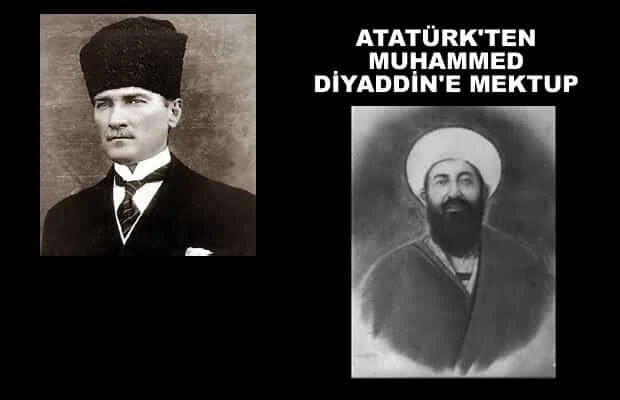
While Hazrat (k.s.) was in the hospital, Mustafa Kemal Pasha visited him. M. Kemal was then at an important rank in the military.
Molla Ömer says;
I served as Hazrat's (k.s.) interpreter. Hazrat (k.s.) said to me:
"This person will come to a great position in the future, I see it in the person's eyes. Tell him to protect the religion."
I told him what Hazrat (k.s.) had told me.(16)
During this war, all the economic affairs of Hazrat's home were looked after by Molla Fethullah and Hazrat's nephew Masum; they would go with mules to Diyarbakır, Urfa and Suruç to procure every kind of provisions, and in this way tried to keep things going. Since hunger and want were great in those years, these services of Masum won Hazrat's appreciation; indeed, in the month of Ramadan of that year, as they sat down for iftar, Hazrat would say: "Let us first pray for Masum, and then eat, for he is the cause of this." In those years and in the later years when comfort began, the students and murids always stayed with Hazrat and did not leave him. Even in these circumstances Hazrat did not fall behind in any work of guidance and teaching.
His Passing
In the year he was to pass away, Muhammed Diyaüddin (k.s.) began to remember death more and to give talks about death in his suhba gatherings. Yet he did not have such a custom. On the contrary, in his earlier talks he would speak more of love and the ways of attaining it, of the states and deaths of the great ones among the people of religion and the world, that is, the prophets, the noble sheikhs (meshayikh al-kiram) and statesmen, and then he would say: "No one escapes this end, that is, death. The most important thing for a person is the deeds he does for his hereafter."
Sheikh Alâeddin Haznevi (k.s.), the son of Shah-ı Haznevi (k.s.), relates the following concerning the passing of Hazrat (k.s.).
"Muhammed Diyaüddin (k.s.) told us a dream he had seen on the night he would pass away, as follows;
"In my dream I saw a great many soldiers coming and going toward the grave of Ustadu'l-A'zam (k.s.). White birds had filled the space between earth and sky. A large bird among them came to me and said:
- Get ready... In the morning, once the day begins to dawn and it is eleven or twelve o'clock, you will set out," he said.
After Hazrat Muhammed Diyaüddin (k.s.) told this dream, the members of the family left his side one by one. As they left they said to me:
- The Sheikh is calling you into his presence together with two or three of his friends.
Upon this, first we and then his other close friends went in to him. When the signs of death began to appear, I said to him,
"It appears that you are leaving us orphaned and not knowing what to do. We have neither a guide nor a protector other than you (you are our only guide and elder)." In reply to my words he said only once: "Alhamdulillah (Praise be to God), you are here." Upon this I said: "My presence (my service) was thanks to you. Otherwise what am I! What benefit could I be to people!"
"God is there. He is enough for everyone (there is no need for anyone else's protection)," he said, and added:
"I have no attachment left to anything but God the Exalted." To these words of his I replied,
"Praise be to God that it is so. It should be so anyway." He must have said this either because his inward had overcome his outward or because he knew that the time of parting had come.
When a close friend hastily reminded him of the talqin, he was not able to say the tahlil "La ilaha illallah" aloud with his tongue. In order to remind him of the tahlil, I asked,
"Every night you would recite the sayyid al-istighfar and the end of Surah al-Baqara. Did you recite these tonight?"
"I do not remember," he said. Upon this,
"Shall I recite these two in your presence? You can recite with me," I said.
"Yes, recite," he said.
I immediately began to recite the sayyid al-istighfar and the end of Surah al-Baqara. He too recited following me. Then,
"During this illness, did you recite the tasbih of Yunus (peace be upon him)?" I asked.
"I recited it forty times. Let us recite it once more now in the same way," he said. I asked him:
"Has the time not now come to say La ilaha illallah?" He said to me:
"Yes. Indeed Khwaja Ahrar (k.s.) said: "Even if you possess the knowledge of a thousand sciences and a thousand fields, (at the moment of death) all of it flies away. Nothing remains in your mind that will benefit your hereafter other than the words La ilaha illallah," he said.(17)
As Muhammed Diyauddin (k.s.) approached death and union, his blessed face took on a brighter, more attractive and more beautiful appearance. Indeed in his last days his cheeks had become rosy and the smile on his face had become more pronounced. For this reason those who saw him thought his health had greatly improved.
At the time he was about to give his last breath, a shine and light like a mirror appeared on his face and forehead. Everyone present saw this shine and light.
On the morning of the day he would pass away, a pleasant fragrance unlike the scents of the world began to spread around from his blessed room. Everyone who entered the room could smell this fragrance. This beautiful fragrance, which continued increasing in the room, enveloped every corner of the house at the moment of his passing. Even those passing outside could smell this fragrance. In the period from his passing until his washing and burial, this beautiful fragrance permeated every piece of cloth touched by his blessed body, and even when washed repeatedly it still did not go away.(18)
The life of Hazrat Muhammed Diyaûddin (k.s.), spent for the good pleasure of his Lord, came to an end in Nurşin on Friday, the 17th of the month of Rajab in the year 1342 AH (1923/24 CE), after the dawn prayer.
His body was washed by Molla Abdullah Baleki and Molla Abdülkerim Tertubi with the help of other friends as well. By his own indication he was buried within the walls of the blessed tomb, right beside his father.
He held the duty of guidance for a total of thirty-four years: ten years while his sheikh (Sheikh Fethullah Verkanisi) was alive and twenty-four years after his sheikh's passing.(19) May my Exalted Lord grant all of us their intercession.
The Medals Given to Hazrat Muhammed Diyaddin (k.s.) by Sultan Muhammed Reşat Han(20)
(TUGHRA) REŞAD – Muhammed Reşad Bin Abdülmecid Han may his resting place be blessed – In consideration of the good services and works of loyalty displayed toward my Exalted Government during the Bitlis incident by the pride of the nobles and the generous, Sheikh Ziyauddîn Efendi, resident in Norşîn, who has become the object of my imperial favor, and in accordance with my royal will honored by being issued with authorization, this Exalted Diploma was issued, containing that the Fifth Rank of the Order of the Medjidie has been granted and bestowed upon the said person. Hurrire Fi'l-Yevmi's-Sadis Aşer Min Şehri Cemaziye'l-Ahire Senetu isna selasûn ve selâsemiete ve elf
(16 Jumada al-Akhira 1332)
Silver Medal of Merit in War
Diploma of the Ghazi (Reşad) Tughra
Since it is among the exalted requirements of my imperial decree that the commanders, officers and soldiers, the lesser officers and men, and the military and civil officials who have rendered service to the homeland by displaying extraordinary heroism and courage at the place of war be rewarded and gladdened in a manner that will be a cause of pride and honor among their peers, and because of the self-sacrifice witnessed in the battles in the regions of Mutki and Huyut of Sheikh Hazrat Ziyauddîn Efendi, the pillar of his peers and equals among the militia chiefs, (two words torn) it having become my imperial..., in accordance with my royal will honored by being issued with authorization, with its clear ruling and its special regulation, this Exalted Diploma was issued, containing that a Silver Medal of Merit in War has been given to him. Hurrire Fi'l-Yevmi'l-Hâdî Aşer Min Şehri Ramadhâni'l-Mubarek Senetu Erba'a ve Selâsûn ve Selasemiete ve elf
(11 Ramadan 1334)
Source: Törehan Serdar/CEVAPLAR.ORG
Footnotes
1- SERDAR M. Törehan, Bitlis 1915-16 Tehcir, Göç, İşgal ve Kurtuluş, Uğurel Matbaası, Bitlis 2007, p. 254 – HAZNEVİ Şeyh Alâeddin, Hazret ve Şah-ı Hazne (k.s) Hayat ve Menkıbeleri, Translation, Abdullah Demiray, Hacegan Klasikleri, Semerkand Basım, Yayın Dağıtım A.Ş. İstanbul, 2012 p. 16 – KORKUSUZ M. Şefik, Nehri'den Hazne'ye Meşayihi Nakşibendî, Kilim Matbaacılık, İstanbul 2010, p. 225 2-KORKUSUZ M. Şefik, op. cit. p. 225
3-http://www.cennetbilvanis.com/bilvanis_forumlari/seyh-muhammed-diyauddin-hz/seyh-muhammed-diyauddin-ks-hayati – KORKUSUZ M. Şefik, op. cit. p. 225
4- http://www.turkforum.gen.tr/vforum/bitlis-ilinde-bulunan-evliyalar-t67272.html
5- http://www.kalpehli.com/archives/1100
6- KORKUSUZ M. Şefik, op. cit. pp. 232-233 http://www.kalpehli.com/archives/1100
7- http://www.kalpehli.com/archives/1100
8- SERDAR M. Törehan, Bitlis 1915-16, op. cit. p. 254
9- http://www.turkforum.gen.tr/vforum/bitlis-ilinde-bulunan-evliyalar-t67272.html
10- Şeyh Muhammed Diyauddin, Şeyh Ahmed El-Haznevi, Mektubat, Translation; Hasib Seven, Mektubat, Yaylacık Matbaası, İstanbul 1977, p. 249
- KINACI Dr. A. Selahaddin, Mektûbât-ı Hazret, Şeyh Muhammed Diyaud-din'nin Mektupları, Sey-Tac Yayınları, Mektubatlar Serisi 3, Ank. pp. 308-309
11- http://www.norsin.biz/norsin-seyhlerinin-hayatlari/seyh-muhammed-diyauddin.htm
12- KORKUSUZ M. Şefik, op. cit. p. 235
13- http://www.kalpehli.com/archives/1100
14- Sheikh Masum's son Sheikh Nurettin Efendi
15- SERDAR M. Törehan, Bitlis 1915-16, op. cit. p. 254 – UÇAN Salih, Nakşibendi Şeyhlerinin Mukaddes Sözleri, op. cit. p. 528
16- Abdurrahman Tagi, Muhammed Diyauddin, İşaretler, Prepared by Retired Lieutenant Colonel Mehmet Ildırar, Umran Yayınları 17, İlmi Eserler Serisi 2, p. 195
http://www.kalpehli.com/archives/1100 – KORKUSUZ M. Şefik, op. cit. p. 235
17- HAZNEVİ Şeyh Alaeddin, Hazret ve Şah-ı Hazne (k.s) Hayat ve Menkı-beleri, Translation, Abdullah Demiray, Hacegan Klasikleri, Semerkand Basım, Yayın Dağıtım A.Ş. İstanbul, 2012, pp. 49-50
18 – Abdurrahman Tagi, Muhammed Diyauddin, İşaretler, op. cit. pp. 196-97
- HAZNEVİ Şeyh Alaeddin, Hazret ve Şah-ı Hazne (k.s) Hayat ve Menkıbe-leri, op. cit. p. 52 –
19- UÇAN Salih, Nakşibendi Şeyhlerinin Mukaddes Sözleri, op. cit. pp. 528-547 – HAZNEVİ Şeyh Alaeddin, Hazret ve Şah-ı Hazne (k.s) Hayat ve Menkı-beleri, op. cit. p. 53
20- http://www.turkforum.gen.tr/vforum/bitlis-ilinde-bulunan-evliyalar-t67272.html http://www.cevaplar.org/index.php?khide=visible&sec=10&sec1=45&yazi_id=5793