

 Türkçe
 Español
 Français
 日本語
 हिन्दी
 العربية
 中文
History of Sufism
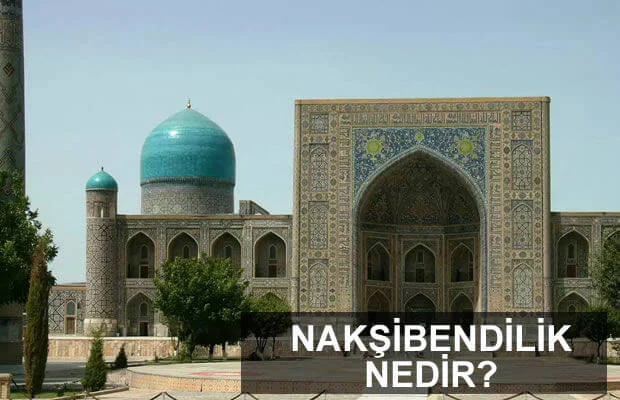
NAQSHBANDISM IN SUFISM
The tariqa founded by Bahauddin Naqshband Muhammed b. Muhammed al-Bukhari and widespread in the Islamic world.
Naqshband is a Persian word meaning "one who makes designs." It received this name because it works upon the heart and adorns it with designs (Abdulmecid b. Muhammed el-Hanî, Hadaikul-Virdiyye fi Hakâikul-Acille en-Nakşibendiyye, Cairo 1306, p. 9).
The name of Bahauddin Naqshband is Muhammed b. Muhammed al-Bukhari. He was born in 718/1318 in Qasr-i Arifan (formerly Qasr-i Hinduvan), 9 km from Bukhara (Tahsin Yazıcı, "Nakşibend," İslâm Ansiklopedisi, Istanbul 1964, IX, 52).
When Naqshband came into the world, Muhammed Baba Semmâsî (d. 740/1339), one of the sheikhs of the Khwajagan tariqa, came to that village with his murids and took Naqshband, who was still very young, as his spiritual son. Speaking of his own states, Bahauddin says on this matter: "The first of the favors of God the Exalted shown to me was that, while I was still in my childhood, I was honored by the gaze of the exalted Sheikh Hâce Muhammed Baba Semmâsî, and that he accepted me as his adopted child" (Salahuddin b. Mübârek el-Buharî, Makamat-ı Muhammed Bahauddin Nakşibend, trans. Süleyman İzzi, Istanbul 1983, p. 29).
It is related that Baba Semmâsî entrusted Naqshband to his murid Emir Külâl, saying, "The training of this man belongs to you" (Seyfuddin Ali b. Hüseyin, Reşahatu Aynil-Hayat, Istanbul 1291, p. 48).
Although Naqshband was affiliated with Emir Külâl, according to what reliable sources report, his true sheikh was Abdulhâlik Gücduvânî (d. 617/1220), who had died many years before him. In Sufism, a person's drawing spiritual flow (fayz) from the spirituality (ruhaniyet) of a sheikh who died before him and establishing rabita with him is called "the Uwaysi way" (Selçuk Eraydın, Tasavvuf ve Tarikatlar, Istanbul 1990, p. 430; Mustafa Kara, Tasavvuf ve Tarikatlar Tarihi, Istanbul 1985, p. 294).
When Bahauddin was about eighteen, his family wanted to marry him off. Bahauddin went to Semmâs to invite Baba Semmâsî. On arriving there he joined the teacher's suhba, and after the delight and peace it gave him he went to the mosque and prayed to the Almighty: "O my Lord!.. Give me strength to bear the burden of trial. Bestow this upon me." When Baba Semmâsî learned of this state of his, he told him to pray instead: "O God!.. Grant this weak servant of Yours whatever is in accordance with Your good pleasure!" He said that trial does not reach one whose constant aim is to earn God's good pleasure; that if God the Exalted sends trial upon one of His saints, He will again grant him strength and endurance by His own care; and that it is not right for a person to ask for trial of his own will.
After Baba Semmâsî died, he went to Samarkand, joined the suhba of the dervishes there, won their respect in a short time and returned to his homeland, Qasr-i Arifan (Ali b. Hüseyn, Reşahât, p. 18).
Bahauddin Naqshband went to the Hijaz twice. On his way there and back he visited various persons and places. In his homeland, Qasr-i Arifan, he had a mosque built and himself worked on its construction as a laborer (Ali b. Hüseyn, Reşahât, p. 61).
Naqshband belonged to the Hanafi school. He held suhba, preached and counseled at every opportunity, and, saying "Our way is based on suhba," encouraged his murids to do likewise. He was also very humble; he showed great respect to guests. He felt love even toward animals and was extremely careful to avoid the forbidden. One day before his death he instructed his murids to follow his khalifa Muhammed Parsa (d. 922/1516), and on Monday, 3 Rabi' al-Awwal 791/2 March 1389, in Qasr-i Arifan, the place of his birth, at the age of seventy-three, he passed into the mercy of the Truth.
After Bahauddin Naqshband, the Naqshbandi tariqa spread over a wide area through Alaeddin Attar, Zahid Bedahşi and Muhammed Parsa. It spread especially in India and its environs in the time of Imam Rabbani (d. 1034/1625). Imam Rabbani's son Muhammed Ma'sûm (d. 1098/1687) also received a serious education and continued his father's moderate Sufi path. Through his son Sheikh Seyfeddin (d. 1100/1689) and his khalifa Seyyid Nûr Muhammed Bedvânî (d. 1135/1723), the tariqa became a madrasa and an institution open to all in terms of the transmitted (naqli), Sufi and communal-duty (fard al-kifaya) sciences. This tariqa entered Istanbul in the time of Mehmed the Conqueror through Molla İlâhî Simâvî (d. 896/1490). With Gulam Ali Dehlevî and Ebû Saîd Müceddidî it also spread into the interior of India. In the eighteenth century, through Mawlana Ziyaeddin Bağdadî, it expanded and became established among the Ottomans. The Ottoman sultans protected Naqshbandism. The existence of sixty-five Naqshbandi dergahs in Istanbul shows how widespread it had become among the people (M. Fuat Köprülü, Türk Edebiyatında İlk Mutasavvıflar, Istanbul 1918, p. 123).
In later years, the Khalidi branch of the Naqshbandi tariqa, founded by Mawlana Khalid al-Baghdadi (d. 1242/1826), became widespread in various parts of Anatolia and in the regions of Syria and Iraq (Reşid Paşa, Tasavvuf, Istanbul 1965, p. 101 ff.).
The silsila of the Naqshbandi tariqa reaches the Prophet through three branches:
The first branch, beginning with Hazrat Muhammad (peace be upon him):
Hazrat Ali (may God be pleased with him) ………. (d. 40/660)
Imam Husayn (may God be pleased with him). (d. 60/680)
Zeynel-Abidin ……. (d. 75/694)
Imam Muhammed Bakır ………. (d. 114/732-33)
Another branch:
Hazrat Abu Bakr (may God be pleased with him) .. (d. 13/634)
Selman Farisî (may God be pleased with him) .. (d. 35/655)
Kasım b. Muhammed (may God be pleased with him) ……. (d. 102/720-21)
Both branches meet in Imam Cafer Sadık …………… (d. 148/765)
Ebû Yezid Bistâmî (d. 261/875)
Ebû Hasan Harkanî ……………. (d. 419/1028-29)
The third branch:
Hazrat Ali (may God be pleased with him) ………. (d. 40/660)
Hasan Basrî (may God be pleased with him) (d. 110/728-29)
Habib A'cemî ……. (d. 150/767)
Dâvud Tâî …… (d. 184/800-801)
Ma'rûf el-Kerhî ….. (d. 200/815)
Sırriyü's-Sakatî .. .. (d. 253/367)
Cüneyd-i Bağdâdî .. (d. 298/910)
Ebû Ali Rudbârî … ……….. …..
Ebû Ali Kâtib …. .. (d. 321/933)
Ebû Osmân Mağribî (d. 373/983)
Ebû Kasım Kürkânî (d. 450/1058)
Both branches meet in Ebû Ali Ferâmedi (d. 477/1084-85).
After this, the silsila continues as follows:
Yûsuf Hemedânî (d. 535/1140-41)
Abdulhâlik Gücduvânî …….. (d. 617/1220-21)
Hoca Ârif Rivgerî (d. 649/1251)
Mahmud İncir Faşnevî …….. (d. 670/1271)
Ali Râmitenî (Azizan) ……. . (d. 705/1305, 715/1315)
Muhammed Baba Semmâsî .. (d. 740/1339)
Seyyid Emir Külâl (d. 777/1375)
Bahaeddin Naqshband ………. (d. 791/1389)
Muhammed Alâeddin Attâr. (d. 802/1399)
Mawlana Ya'kub Çerhî …….. (d. 847/1443)
Ubeydullah Taşkendî ………. (d. 895/1490)
Muhammed Parsa ….. …….. (d. 922/1516-17)
Derviş Muhammed (d. 970/1562)
Hacegî Emkenegi (d. 1008/1599)
Muhammed Baki Billah …… (d. 1014/1605)
Imam Rabbani … (d. 1034/1625)
Muhammed Ma'sum ……….. (d. 1098/1687)
M. Seyfeddin Fârukî ………… (d. 1100/1689)
Muhammed Bedvânî ……….. (d. 1135/1723)
Şemseddin Habibullah …….. (d. 1195/1781)
Abdullah Dehlevî ….. ……… (d. 1240/1824-25)
Mawlana Khalid al-Baghdadi ……. (d. 1242/1826)
This tariqa silsila has been called "Siddiqiyya" from Hazrat Abu Bakr (may God be pleased with him) to Ebû Yezid Bistâmî; "Tayfuriyya" from Bistâmî to Abdulhâlik Gucdüvânî; "Khwajaganiyya" from Gucdüvânî to Muhammed Bahâeddin Naqshband; "Naqshbandiyya" from Bahâeddin Naqshband to Ubeydullah Ahrâr; "Naqshbandiyya-i Ahrariyya" from Ubeydullah Ahrâr to Imam Rabbani; "Naqshbandiyya-i Mujaddidiyya" from Imam Rabbani to Şemseddin Mazhar; "Naqshbandiyya-i Mazhariyya" from Şemseddin Mazhar to Mawlana Khalid; and "Naqshbandiyya-i Khalidiyya" after Mawlana Khalid (Selçuk Eraydın, Tasavvuf ve Tarikatlar, p. 434 ff.).
The following eleven principles laid down by Abdulhâlik Gücduvânî (d. 617/1220) form the basis of the Naqshbandi tariqa:
1- Wuquf-i zamani: The murid's making very good use of his time.
2- Wuquf-i adadi: The count of the lesson and its true meaning should be reflected upon.
3- Wuquf-i qalbi: One must keep the heart awake.
4- Hush dar dam: Not being heedless while breathing in and out.
5- Nazar bar qadam: One should look at oneself, not at another.
6- Safar dar watan: Departing from the people and going to the Truth.
7- Khalwat dar anjuman: Even among the people, there should be a state of seclusion.
8- Yad kard: Constantly repeating, with heart and tongue, the dhikr given by the sheikh.
9- Baz gasht: Returning to God with dhikr; union (wusul) should be contemplated.
10- Nigah dasht: Guarding the heart from harmful thoughts.
11- Yad dasht: Leaving all besides God (masiwa) and thinking only of God (Mustafa Kara, Mezhepler ve Tarikatlar Ansiklopedisi, Istanbul 1987, p. 156).
Some scholars have also summarized the principles of the Naqshbandi tariqa in the following points:
1- Cleansing the outward with the sharia.
2- Cleansing the inward with the tariqa.
3- Reaching divine nearness (qurb) with the haqiqa.
4- Reaching God with gnosis (marifa) (Mustafa Kara, Tasavvuf ve Tarikatlar Tarihi, p. 295).
As pointed out at the beginning, the Naqshbandi tariqa, which is bound to the creed of Ahl al-Sunna, has attached extreme importance to occupying oneself with various sciences and to conveying these sciences through sermons and suhba. It has held that occupying oneself with knowledge, and benefiting from the positive sciences, especially physics, chemistry, biology and the like, which are a means to perceiving the power and greatness of the Truth, is a kind of dhikr.
Also, the members of the Naqshbandi tariqa have attached the greatest importance to following and being bound to the principles of the sharia. The statements of Sheikh Ahmed Farûkî,
"Observing one of the sharia manners, or giving up one of the disliked things (makruh), is more virtuous than dhikr, reflection, contemplation (muraqaba) and turning toward the stations" (Muhammed b. Abdullah Hânî, Âdâb, trans. Abdulkadir Akçiçek, Istanbul 1976, p. 13) make this clear.
Furthermore, so that idle people may be protected from the claws of the nafs and from various bad habits, the Naqshbandi tariqa has recommended occupying oneself with repentance, asking forgiveness, dhikr, reflection, supererogatory prayers and the like. Conquering the nafs and keeping the heart under control in this way is called muraqaba.
As in other tariqas, there is rabita in the Naqshbandi tariqa as well. They explain rabita as follows: The murid who cannot directly establish a spiritual bond and connection with God imagines that all the sheikhs in the silsila, from the Messenger of God (peace be upon him) to his living murshid, are seated, and that he himself is seated beside his murshid and receives spiritual flow (fayz) from them; this is called rabita. The flows received by way of rabita are a means to progress on the spiritual path. The point to heed in rabita is that the person with whom rabita is made be an expert in this work, a scholar and a perfect murshid. Otherwise the desired result cannot be obtained. By means of rabita the murid reaches "fana fi'sh-Sheikh," then "fana fi'r-Rasul," and "fana fillah." If a person does not have the capacity for "fana fillah" (annihilation in God the Exalted) directly, without an intermediary, it is recommended that he practice rabita. In other cases it has not been seen as necessary (M. Halid, Râbıta hakkında Risâle, Istanbul 1924, p. 238; Selçuk Eraydın, Tasavvuf ve Tarikatlar, p. 447).
The Naqshbandis remember God secretly, in the heart. This form of dhikr is called the "Khafi" (silent) dhikr.
The dhikr performed collectively in the Naqshbandi tariqa is called Khatm-i Khwajagan. If the number of murids is fewer than ten, it is the small khatm; if more, the great khatm, performed aloud or silently. There are two differences between them. One is the omission of Surah al-Inshirah, which is to be recited 79 times; the other is the recitation of "Ya Baqi anta'l-Baqi" 500 times in place of 1001 Ikhlas recitations (Mustafa Kara, Mezhepler ve Tarikatlar Ansiklopedisi, p. 156).