Türkçe
 Español
 Français
 日本語
 हिन्दी
 العربية
 中文
Hazrat Seyyid Taha-yı Hakkâri (k.s)
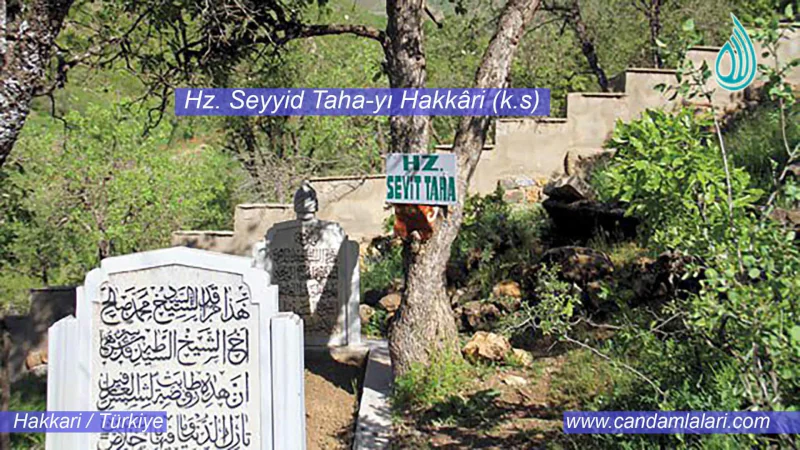
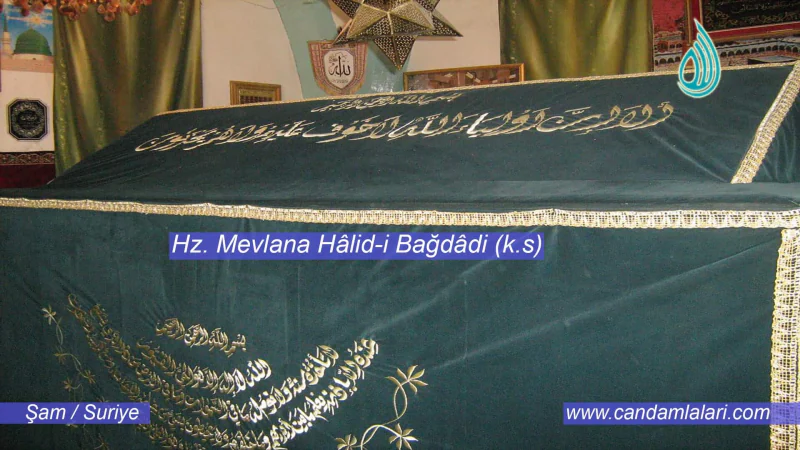
Hazrat Seyyid Taha-yı Hakkâri is one of the great saints who lived in Anatolia. He was of the lineage of our Prophet (peace be upon him) and a descendant of Hazrat Seyyid Abdulqadir-i Geylani in the eleventh generation. He was one of the khalifas of Hazrat Mawlana Khalid-i Baghdadi. He passed away in 1853 in Nehri, near Şemdinli. His tomb is there and is visited, and people benefit from its grace and blessings.
Born into a noble and pure family, Seyyid Taha-i Hakkari showed signs of greatness and maturity even in childhood, and with his intelligence, aptitude, dignity and awe-inspiring presence he drew everyone's attention. Everyone who saw him said that he would become a very great person in the future. At a young age he completed the recitation of the noble Quran and memorized it. Then he began his studies. Going to centers of learning such as Sulaymaniyah, Kirkuk, Iraq, Erbil and Baghdad, he learned from renowned scholars the outward sciences such as Quranic exegesis, hadith and jurisprudence, as well as the sciences and letters of his time.
While Seyyid Taha was still a student, one day near Baghdad he was performing ablution from a very small stream. His friends said, "There is too little water here; it will not do for ablution," and he said, "Look, huge fish live in this water," and showed the fish in his hand. Seeing this great miracle, his friends said, "From now on, whatever you do, we will never object to you again."
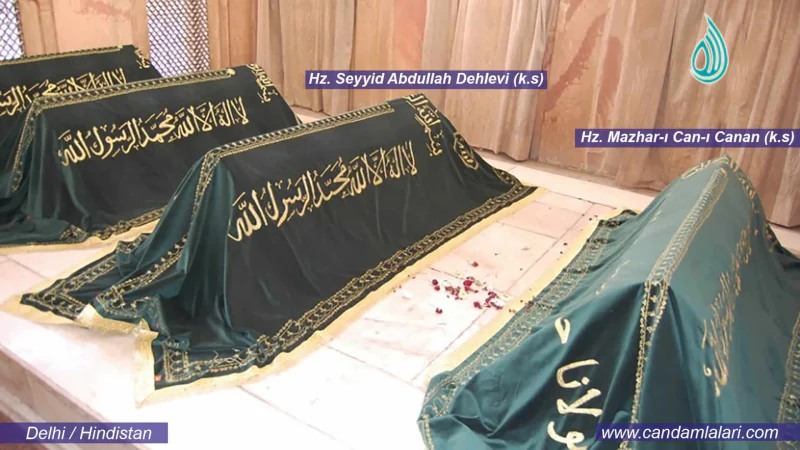
Hazrat Mawlana Khalid (k.s), the Qutb of the thirteenth Hijri century, went to India, had the honor of being in the presence of Hazrat Ghulam Ali Abdullah Dehlevi (k.s), and received the virtues and perfections of which he was worthy and deserving. Then he returned to his homeland in order to show the servants of God Most High (Exalted is He), the right path and bring them to the Truth. All around, the land began to be illuminated by the lights that radiated from Mawlana's heart. Meanwhile his friend Seyyid Abdullah went to visit Mawlana, who was in Sulaymaniyah. Attending his suhba, he reached perfection and became his khalifa-i akmal, that is, his most mature khalifa. He told Mawlana Khalid-i Baghdadi about the extraordinary and high aptitude of his brother's son Seyyid Taha. Hazrat Mawlana Khalid-i Baghdadi ordered him to bring Seyyid Taha along on his next visit. On their second visit Seyyid Abdullah took his nephew Seyyid Taha with him. As soon as Hazrat Mawlana saw Seyyid Taha in Baghdad, he ordered him to go to the noble tomb of Hazrat Abdulqadir Geylani and perform istikhara. Seyyid Taha went to the tomb and performed istikhara. His forefather Hazrat Abdulqadir Geylani said, "Mawlana Khalid is the scholar of his time and the greatest of the saints. Go to him at once, submit to him, place yourself under his command."
Upon the spiritual command and permission of his great-grandfather Hazrat Seyyid Abdulqadir-i Geylani, Seyyid Taha came into Mawlana's presence. It was an arrival such as few have been granted; from this beginning and this arrival it was already clear how he would depart and what he would have gained. Mawlana gave his spiritual aid and help so that Seyyid Taha might grow and attain stations that eyes have not seen, ears have not heard and hearts have not conceived. With care and seriousness he trained him in a manner befitting the one who would become the greatest scholar and saint of his time. He never fell short in his asceticism and striving.
In the course of raising and training him, Hazrat Mawlana Khalid had Seyyid Taha bring stones from the mountain. His students found this astonishing, and they would say, "Our teacher Mawlana is very devoted to the Family of the Messenger of God, so what is the wisdom in sending Hazrat Seyyid to the mountain?" Hazrat Mawlana would not speak about this but remain silent.
After staying eighty days with Mawlana Khalid-i Baghdadi, Hazrat Seyyid Taha attained very high degrees in sainthood. As a possessor of unveiling and miracles he was honored with the absolute khilafa.
When Hazrat Seyyid Taha, honored with the khilafa, was about to set out for Berdesur, Mawlana saw him off with a great congregation. After the farewell, Seyyid Taha sensed that Mawlana had left, and when he wanted to mount his horse he realized that someone was holding the stirrup. When he looked, he saw that the one clutching and holding the stirrup was his teacher Mawlana. Saying "Astaghfirullah" he drew back. Mawlana addressed Hazrat Seyyid Taha: "For a time, for the training of your nafs, I had you bring stones from the mountain. Now, because of my devotion to the Family of the noble Messenger, no one but me can hold your stirrup. You cannot avoid this either." Embarrassed, he mounted in accordance with the saying "The command is above adab." For a while he rode on in the farewell procession, joined by thousands of scholars, righteous people, students and townspeople. Then Mawlana stopped. Handing the reins in his hand to Seyyid Taha, he said, "From now on the reins are in your hand. I have not fallen short in your training and upbringing. May the Almighty be your helper, and may the spirits of the great ones be your refuge." Hazrat Taha-yı Hakkâri came to Berdesur as the khalifa of Mawlana Khalid-i Baghdadi.
While his uncle Seyyid Abdullah was busy training students in Nehri, many who could not understand the wisdom in Seyyid Taha's also having been sent to Berdesur, which was very near there, said, "What is the reason for sending two such great khalifas to one place?" But they understood this a short time later, when Seyyid Abdullah passed away. Thereupon Hazrat Seyyid Taha, who was known by the people of that region as Seyyid-i Büzürk (the Great Master), came to the town of Nehri and began to guide. For forty-two years here he radiated knowledge, grace and light upon students of knowledge, lovers of the Truth and seekers of the Truth. Lovers gathered like moths from far and near around this source of guidance and light.
Through the blessing of Seyyid Taha's talks, very many people gained the pleasure of God Most High (Exalted is He). Whoever saw him, Muslim or non-Muslim, was reminded of God Most High (Exalted is He), at that moment.
About avoiding deniers and people of innovation he said:
"Flee from the denier and from the people of innovation as you flee from a lion! The heart of one who eats the bread of a denier is dead to dhikr for forty days. If these deniers had been in the time of the Messenger of God, they would not have believed in him."
Hazrat Seyyid Taha represented Hazrat Abu Bakr al-Siddiq in loyalty and faithfulness, Hazrat Umar in courage and justice, Hazrat Uthman in modesty and forbearance, and Hazrat Ali in the greater sainthood (may God be pleased with them all). He was exactly like one of the noble Companions close to the Messenger of God.
Such were his dignity and majesty that one could not look at his blessed face. The light of majesty on his face dazzled the eyes like the moon on the fourteenth night. He was a piece of light of medium height, with a broad forehead, thick, wide-set eyebrows, blessed black eyes, a round face and a rounded beard. People of heart fell spiritually in love when they saw him. Those who were worthy of his suhba were beside themselves with love. When one entered the boundary of Nehri, the fragrances of grace and love overwhelmed the wise and the people of heart. Visitors could not enter Nehri without ablution.
Hazrat Seyyid Taha performed the tahajjud prayer mostly in his blessed home, and sometimes in his own mosques. He always performed the forenoon prayer in the mosque. Every day he inspected the madrasas and examined the studies of the teachers and students. He solved the teachers' difficult questions. Nehri, like an anthill, was always full of righteous people and students. Thousands of people of heart, bowing their necks, flocked to that lodge to receive grace. Night and day there was not a moment in that place without dhikr, reflection, worship and obedience. When Hazrat Seyyid Taha honored the lodge with his presence, everyone's hearts were fastened to the words that would come from his pearl-scattering tongue.
After the afternoon prayer the "Great Khatm-i Khwajagan" was recited, then the Maktubat of Hazrat Imam Rabbani. If Hazrat Seyyid Fehim was in Nehri, he would have him read it, and if he was not, he would have his esteemed son-in-law and khalifa Hazrat Seyyid Abdulahad read it.
Meanwhile, extensive explanations given on some word or sentence formed the basis of his talks. In Nehri no guest, even were he a grand vizier, was served a meal between the evening and night prayers. This time was spent in dhikr, reflection and worship. Supper was eaten before the evening prayer. He forgot none of those who loved him or any of his students, and would inquire at length about everyone's condition. If anyone had a trouble, he would try to remove it at once. He attached importance to keeping family ties and visiting relatives, and met the needs of the needy. Following the advice of his teacher, he had no dealings with statesmen, and wrote letters only to prevent harm to some Muslims. Yet all statesmen, beginning with Sultan Abdülmecid Khan, were ready and at hand for his every command.
Very many miracles are told of Seyyid Taha-i Hakkâri.
One night a thief entered Hazrat Seyyid Taha's storeroom and wanted to take a sack of flour. He filled the sack but could not lift it. He emptied it halfway, and still could not lift it. He emptied a little more. Still he could not lift and carry it off. At that moment Hazrat Seyyid Taha came to the storeroom and said, "What is it, can you not lift the sack? Let me help," and the thief froze and could not say anything. After Hazrat Seyyid lifted the sack and put it on the thief's back, he said, "Take this and go, so that our people do not see you; they might hurt you. If you need anything again, do not come to the storeroom, come to us!" The thief repented and became one of his devoted students.
His teacher Hazrat Mawlana Khalid-i Baghdadi said in a letter he wrote to him: "May God Most High (Exalted is He), honor Seyyid Taha, the beloved of my heart, by bringing him to the end of the stations of fana and baqa. Your letter has come, declaring your attachment to this poor one with the bond of love and sincerity. We were very glad at your news that you are working in the service of the exalted Naqshbandi path and of your reciting the whole Quran by a set method. On condition of sincerity, for whatever people do through you, such as worshipping God Most High (Exalted is He), or following the blessed Sunna of our Prophet (peace be upon him), a reward equal to what they earn will also be written in your book of deeds. 'As the Muslim who opens a good path is given the reward of that path, so too is he given the reward of those who walk on it, and nothing is diminished from their reward' - this noble hadith is clear proof of these words of ours. May the peace, mercy and blessings of God Most High (Exalted is He), be upon you. The weakest of servants, Khalid-i Naqshbandi."
Hazrat Seyyid Taha writes in a Persian letter to his student Seyyid Sıbgatullah Arvasi: "Two things must be preserved. These are: utmost devotion to the Owner of the religion, and sincerity and love toward one's teacher. When these two exist, whatever is given is a blessing. If these two are strong and nothing else is given, one should not be sad at all. It will be given in the end. If, God forbid, there is a flaw or defect in one of these two, then even if states and tastes are found along with it, one must know them to be istidraj and see one's own ruin. This is the right path. May God Most High (Exalted is He), grant success!"
Two young sayyids from Iraq set out to bring Hazrat Seyyid Taha six mules loaded with gifts to Nehri. When passing through the village of Harunan, a man named Musa Bey, who denied Hazrat Seyyid Taha's greatness, seized the mules together with their loads. The young men came to Nehri weeping and informed Hazrat Seyyid Taha. Seyyid Taha sent word to Musa Bey: "Since the loads of these mules belong to me, let the loads be yours. These youths are sayyids. Have mercy on them and hand over their mules." Musa Bey did not heed his order and did not give back the mules. He sent word a second time: "Let him give them in my name and for my sake." When he opposed this too, Seyyid Taha said in great anger, "Let Friday night come, and then let us see him refuse." On Friday night students went from Nehri and kept watch to learn the outcome. It turned out that the Bey was sitting in his reception hall with his followers, speaking in denial of Seyyid Taha's sainthood.
After this assembly of wickedness ended, he went into his bedroom and as he lay on his bed, a pain seized his stomach, and crying out, "My belly!.. my belly!.." he gave up his life. His nine sons, understanding the situation, at once came to Nehri, handed over the mules with their loads, and took refuge with Seyyid Taha. They said, "Please, out of mercy, attend our father's burial and pray." He answered them, "My being there will bring him no benefit." The children insisted greatly. Finally Hazrat Seyyid got up and went to the funeral. The body was seen to be pitch black. After the burial Seyyid Taha said, "He did not benefit in the least from my coming." The Almighty thus punished him for insulting and grieving a sayyid. Everyone saw it clearly.
A man from the Gürpınar district of Van went to Nehri and wished to become Seyyid Taha's student. Once accepted, he returned home. A few days after he became a student, wolves seized and destroyed some of his animals. Satan whispered, "Attaching yourself to this teacher did not benefit you, he has brought bad luck." Finally that student returned to Köse Halife the prayer beads that Hazrat Seyyid Taha had earlier given him as a gift, so that they would be given back to him. His intention was to part from his teacher. When the prayer beads were presented to Seyyid Taha, he smiled. Months passed. One day at noon, as Hazrat Seyyid Taha rose for prayer, he suddenly stretched out his blessed hands and said, "Begone, accursed one!" and began the prayer. After the prayer Halife Köse asked, "My master, what was the wisdom in stretching out your blessed hands?" He said, "A Muslim in Gürpınar was in the throes of death, and Satan, may God curse him, was trying to make him depart without faith. He was driven off by the blessing of the great ones. The man died with faith." Halife Köse said, "Could it be the one who returned the prayer beads?" He said, "Yes, that is the one." When he said, "My master, why did you help him, he was impertinent and returned your gift," he said, "Never mind, he once loved us a little."
Hazrat Seyyid Taha always showed respect and service to his benefactor, his uncle Hazrat Seyyid Abdullah, who had brought him to Mawlana Khalid-i Baghdadi, in thanks for this great blessing. He always spoke of him with kindness and presented very many rewards to his spirit. He also said: "When I die, make my grave at the highest part of the cemetery, so that those who come only to visit me will be obliged to stop at the grave of my uncle Hazrat Abdullah. Let them visit him too and gift rewards to his blessed spirit." (That cemetery had a single road. Seyyid Abdullah's grave was at the entrance. Whoever wanted to go to Hazrat Seyyid Taha's grave had to pass beside Seyyid Abdullah's grave.)
One day Hazrat Seyyid Taha said to Seyyid Sıbgatullah:
"Molla Sıbgatullah! Love for the master and suhba with him are above everything. For the master, by bringing his student to the highest of the stations of perfection and granting him gnosis, removes and eliminates his illnesses."
He also said:
"Hazrat Shah-i Naqshband founded the basis of his path on the path of the noble Companions. Just as they were content with love for the Messenger of God, for us too love for the master is enough."
He said to one of his khalifas:
"Deal with people first by gesture; if this does not help, speak with words. If this does not help either, turn away from him. If you turn your face from someone, all the great ones of the 'Exalted Chain,' up to the Messenger of God, turn their faces from him."
In his talks at various times he said:
"Do not cover and destroy your deeds with ujb (self-admiration, regarding worship as one's own doing)."
"The benefits of the travelers on our path reach their mothers and fathers too."
During the forty-two years Hazrat Taha-yı Hakkâri stayed in Nehri, he worked for people's salvation in this world and the hereafter by explaining the commands and prohibitions of Islam. Like all his teachers, he spread the beautiful character of Islam. He did not involve himself in politics. He trained very many saints and gave them the khilafa. He entrusted them with explaining the commands and prohibitions of Islam. The most famous of his khalifas are his brother Seyyid Muhammed Salih, Seyyid Sıbgatullah Arvasi and Seyyid Fehim Arvasi. He also had other khalifas besides these.
The Golden Chain continues with Hazrat Seyyid Sıbgatullah Arvasi.
In the year 1852, at the time of the afternoon prayer, Hazrat Seyyid Taha-i Hakkari was in suhba with his students at a wooded spot called Haram Çeşmesi (Haram Spring). During the suhba two letters were presented to him. After having his valued son-in-law Abdülehad Efendi read them, he said, "Abdülehad! Fame is a calamity. Now the time has come for us to depart from the world." Abdülehad said, "Mercy, my master, what are these two letters that have come from Damascus?" That day after the suhba he went to his blessed house and fell ill there. He lay ill for eleven days. Despite the severity of his illness, he tried to perform his prayers standing as far as possible. On the twelfth day of his illness, a Saturday, he asked forgiveness of and bade farewell to his students and relatives, and announced his will. He summoned his brother Hazrat Seyyid Salih. Of him he said, "My brother Salih is a perfect, mature saint. Everyone's head is beneath his hem." He left his brother Hazrat Salih as khalifa in his place. At the time of the afternoon prayer, amid his students' recitation of the noble Surah Yasin, he surrendered his blessed spirit, pronouncing the Kalima of tawhid.
His tomb is in Nehri. Those who love him, coming from distant places, benefit and are blessed by the lights and graces that radiate from his blessed tomb.
What you seek is not at this door
A man who claimed to be a sheikh in the region of Mosul sent one of his students to Hazrat Seyyid Taha and said, "Do not return here before you have Seyyid Taha do something that is not in accordance with the Sunna!" He set out and came to Nehri. After an afternoon prayer, he took the left one of Hazrat Seyyid Taha's shoes, which stood at the door of the mosque, and put it far away. He thought that in this way the Seyyid would leave the mosque with his right foot and so do something not in accordance with the Sunna. But Hazrat Seyyid Taha, amid the crowd, addressed that person and said, "Put back the shoe you took! What you seek is not at this door."
The cane and the beating
A teacher named Molla Abdullah from the Herki tribe, going to visit Nehri with two students, sat down beside a stream. Molla Abdullah said to his students, "Everyone goes to Nehri after making ablution. No one goes without ablution. I will break this custom and go without ablution." His students said, "Teacher, let us not break this custom, let us make ablution and go," but the Hoca Efendi said, "Is this a religious ruling? I will not do it." Meanwhile, as he washed his hands and face, the cane under his arm fell into the water. As he stretched out his hand to take the cane, by divine wisdom the cane struck his head and face and left his face and eyes covered in blood. Then the cane vanished. He regretted having spoken so. He bandaged his wounds and made ablution. He went to Nehri. When he entered Hazrat Seyyid's lodge, he saw the cane hanging on the wall. When his eyes remained fixed on the cane, Hazrat Seyyid Taha said, "You must have been beaten with this cane." Molla Abdullah regretted what he had done, repented, and was honored to become one of his students.