Türkçe
 Español
 Français
 日本語
 हिन्दी
 العربية
 中文
Hazrat Seyyid Şeyh Muhammed Zahid (k.s)

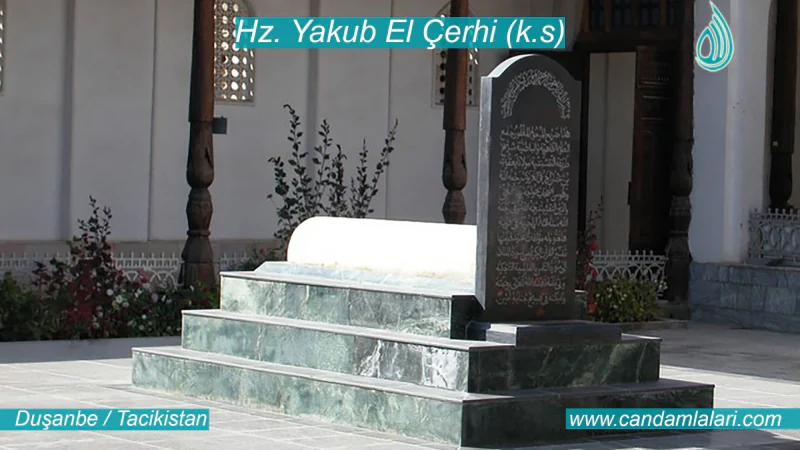
One of the great friends of God (awliya) raised in Turkestan. His name is Muhammed bin Burhaneddin. His mother was a daughter of Hazrat Yakub-i Çerhi, one of the great ones of the exalted silsila. He is known by the epithets Zahid and Qadi and by the nisba Samarkandi.
Muhammed Zahid, who belonged to a noble family of scholars, pursued learning from an early age. After acquiring the basic religious knowledge, he turned to Sufism. Muhammed Zahid entered the service of Hazrat Ubeydullah Ahrar. For twelve years he attended his suhba, which was a healing for hearts, and rose to the rank of sainthood (wilaya). He gathered what he heard from his teacher in his work titled Mesmuat-ı Mevlana Kadı Muhammed Zahid. He also gathered the lives, words, beautiful states and miracles of the friends of God in his work titled Silsiletü'l-Arifin.
A Living Cat Is Better Than a Dead Lion:
During the years when Qadi Muhammed Zahid was in the service of his sheikh, he went to visit the grave of a sheikh named Hoca Zekeriya in Samarkand. But he felt something extraordinary within himself, and with an unbearable pain in his stomach, just as he set his foot on the door of the tomb, he threw himself outside. He judged that this had befallen him because he had come without his sheikh's permission. He returned to his sheikh in a state as though his will and choice had been taken from his hands. Before Muhammed Zahid had said anything, Ubeydullah Ahrar said to him: "Do you not know that a living cat is better than a dead lion?", pointing out that in guidance one should attach oneself and make rabita not to sheikhs who have died but to living murshids.
He said: "The presence of Islam is equivalent to the presence of the Messenger of God. Just as punishment was lifted and did not come upon people while the Messenger of God was alive, so too, because Islam is present in a place and because of following Islam, punishment is lifted. Punishment also does not descend because of seeking forgiveness (istighfar). Istighfar prevents the coming of punishment. To disobey the commands of God Almighty on the one hand and, on the other, to say "Astaghfirullah, Astaghfirullah" is not istighfar. The meaning of istighfar is to follow the commands of God Almighty and to avoid the things He has forbidden. One must hold fast to the causes that lead to the mercy and forgiveness of God Almighty. One must avoid doing things such as oppression and rebellion."
He said: "The arrival of spiritual aid depends on capacity (aptitude)."
He said: "The time of youth is an opportunity and a prize to be seized. Woe to the one who does not turn this precious time and these breaths into a means of happiness."
He said: "The difference between worship (ibada) and servanthood (ubudiyya) is this: worship is doing the duties that religion commands, while servanthood is for the heart to be far from heedlessness and always to be in a state of reverencing its Lord."
After his teacher's passing he went to Tashkent and explained the path of Truth to people. He passed away in 1530 (936 AH) in the village of Vahş, near Samarkand.