Türkçe
 Español
 Français
 日本語
 हिन्दी
 العربية
 中文
Hazrat Cafer-i Sâdık (may God be pleased with him)
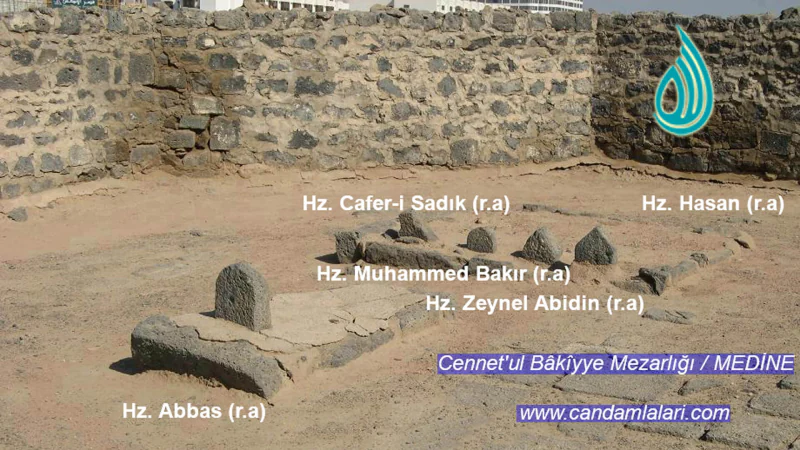
Ca'fer-i Sadık, who forms the fifth link of the Golden Chain, is of the pure lineage both of the Blessed Prophet (peace be upon him) and of Hazrat Abu Bakr (may God be pleased with him). His father, Muhammed Bakır, was a grandson of Hazrat Hüseyin; his mother, Ümmü Ferve, was a granddaughter of Hazrat Abu Bakr and the daughter of Kasım b. Muhammed, who forms the fourth link of the Golden Chain. He was born in Medina in 83 AH/702 CE. He is the sixth of the famous Twelve Imams. He was born in Medina in the Hijri year 83. He was the eldest son of his father Muhammed Bakır (may God be pleased with him).
He had advanced so far in knowledge that he was called the peerless one of his time. While a figure such as the Greatest Imam (Imam Azam) was taking lessons at the knees of Imam Cafer, he himself was receiving the secrets of the heart from Maruf-i Kerhi.
It is even said that, pointing to the spiritual change that took place in his life after getting to know him, Abu Hanifa said:
"Had it not been for the last two years, Numan would have perished."
He was as much a master of the material sciences as of the science of meaning. He was the master of his day in the science of chemistry. Jabir (El Cabir), the inventor of algebra and later one of the greatest inventors in chemistry, was his student.
The epithet "sadık" (truthful) was attached to him because of his truthfulness. When Eba Müslim Horasani raised the banner of revolt against the Umayyads, he sent a letter to Hazrat Cafer-i Sadık:
-"Be the caliph!"
Cafer-i Sadık answers:
-"I do not accept the caliphate." And he burns the letter. For he was the caliph of the science of meaning…
He said: "It would not befit a person of honor and dignity not to do these four things:
1- To rise to his feet when his father enters the assembly where he is.
2- To serve his guests.
3- To mount his riding animal without asking for help, even if he has a hundred servants.
4- To serve the teacher from whom he learns knowledge."
He said: "When you commit a fault, ask forgiveness from God (Exalted is He). For faults were created before people were created. All destruction lies in persisting in a fault."
He used to say: "If you hear of something you dislike about a believing brother of yours, search for excuses from one up to seventy. If you cannot find one, say, 'Perhaps he has an excuse that I do not know,' and close the matter."
He said: "If someone's provision becomes scarce, let him persist in asking forgiveness."
He used to say: "If someone wants a possession he loves to remain in his hands, let him say, each time he looks at it, 'What God has willed; there is no power but with God.'"
He said: "The jurists are the deputies of the prophets, so long as they do not fawn at the doors of sultans."
He used to say: "Beware of five kinds of people: the liar, the fool, the miser, the ignoble, and the transgressor."
One day Davud-i Taî (may God be pleased with him) came into Sadık's presence and said: "O son of the Messenger of God Almighty (peace be upon him), give me counsel, my heart has darkened." He said: "You are the ascetic of the age. You have no need of my counsel." When Davud said, "O son of the Messenger of God (peace be upon him), the Exalted Truth has given you a virtue above everyone; you must counsel everyone," he said: "O Abu Sulayman! I fear that on the Day of Judgment my forefather (peace be upon him) will say, 'Why did you not follow me as was due?' This is not a matter of lineage; it is a matter of deeds."
When Davud heard this he wept and said: "O my Lord, the root of his worth, the composition of his creation from the water of prophethood, is among the people of the proof. Though his grandfather is the Messenger and his mother is Batul (she is a child of Hazrat Fatima), if he is in such awe, who is Davud that what he has done should have any worth?"
One day he called his slaves. "Come, let us pledge allegiance and give our word that on the Day of Judgment, whichever of us is saved will intercede for the others." They said, "O son of the Messenger of God (peace be upon him), you have no need of our intercession. Your grandfather is the intercessor of all people and jinn." The Hazrat Imam said, "With this deed of mine, I would be ashamed to look at the face of my forefather on the Day of Judgment."
One day he was walking alone on the road, saying "God, God." Behind him another person with a burning heart was walking and saying "God, God." Sadık said: "God! I have no clothes, I have no robe." Suddenly a bundle of clothes appeared. Sadık put on the clothes. The person who had been behind him came into his presence and said: "O Master! While you said 'God, God,' I too was saying it with you. Give me your old clothes too." These words pleased Sadık, and he gave him the clothes he had taken off.
He said: "One who strives against his nafs for the sake of his nafs attains miracles (karamat); one who strives against his nafs for the sake of God attains God Almighty."
A man came into the presence of Hazrat Cafer Sadık and said, "Show me God Almighty."
"Do you not know that it was said to Moses, peace be upon him: وَلَمَّا جَٓاءَ مُوسٰى لِم۪يقَاتِنَا وَكَلَّمَهُ رَبُّهُۙ قَالَ رَبِّ اَرِن۪ٓي اَنْظُرْ اِلَيْكَۜ قَالَ لَنْ تَرٰين۪ي وَلٰكِنِ انْظُرْ اِلَى الْجَبَلِ فَاِنِ اسْتَقَرَّ مَكَانَهُ فَسَوْفَ تَرٰين۪يۚ فَلَمَّا تَجَلّٰى رَبُّهُ لِلْجَبَلِ جَعَلَهُ دَكًّا وَخَرَّ مُوسٰى صَعِقًاۚ فَلَمَّٓا اَفَاقَ قَالَ سُبْحَانَكَ تُبْتُ اِلَيْكَ وَاَنَا۬ اَوَّلُ الْمُؤْمِن۪ينَWhen Moses came at the appointed time and his Lord spoke to him, he asked, “My Lord! Reveal Yourself to me so I may see You.” Allah answered, “You cannot see Me! But look at the mountain. If it remains firm in its place, only then will you see Me.” When his Lord appeared to the mountain, He levelled it to dust and Moses collapsed unconscious. When he recovered, he cried, “Glory be to You! I turn to You in repentance and I am the first of the believers.” (Al-Araf 7:143, Diyanet)?"
"I know, but this Ummah is the Ummah of Muhammad the Chosen (peace be upon him). Some say, 'I see God Almighty with my heart,' and some say, 'I will not worship unless I see my Lord,'" he said.
Sadık said: "Tie this man up and throw him into the Tigris." They tied the man up and threw him into the Tigris. They submerged him in the water and pulled him out.
He said: "O son of our Prophet (peace be upon him), save me."
Sadık said: "O water, take him in." He sank again. When he came up he said: "O son of the Messenger of God (peace be upon him), save me." Again he said "O water, take him in." This went on a few times. At last, having cut off hope from everything, as he was submerged in the water he asked nothing of people and said "O my Lord, save me." Sadık said, "Bring him out." They brought him out. They laid him down for a while so that he might recover.
Then he said: "Did you see the Truth?" He said: "As long as I was asking help from another, there was a veil before me. When I took refuge in Him with my whole being, a window opened in my heart. I looked from there and found what I was seeking."
Sadık said: "Until you spoke the truth, you were a liar. Now guard well that window that has opened in your heart."
Ebu Basir relates: "I had gone to Medina. I had a slave woman with me. I had been with her. I went outside to go to the bathhouse. I saw some people. They were going to visit Imam Cafer-i Sadık. I joined them. We went and entered. Looking at me he said: 'O Ebu Basir, do you not know that one cannot enter the presence of the prophets and their sons in a state of major impurity?' I had come so as not to be deprived of visiting you. I repented, promising not to do so again, and went out."
Someone related: I had a friend. The Caliph Mansur had imprisoned him. In one pilgrimage season, after the afternoon prayer, I saw Imam Cafer-i Sadık. He asked about my friend who was in prison. I said he was still in prison. He prayed at once. A little later, swearing an oath himself, he said: "They released your friend on the day of Arafat after the afternoon prayer."
Again someone relates: "We were going to Mecca with Imam Cafer-i Sadık. A woman with her children was weeping around a dead cow in front of them. They asked what the matter was. The woman said, 'We lived on the milk of this cow. Now it has died and we do not know what to do.'" The Hazrat Imam said, "Would you like God Almighty to bring this cow back to life?" The woman said, "As if this misfortune were not enough, are you mocking me too?" The Imam said he was not mocking and prayed. Then he touched the animal with his blessed foot. The animal rose up healthy. The Hazrat Imam entered the crowd and vanished. The woman could not understand who had done this great deed.
Again someone relates: "We were with a group of people in the suhba of the Hazrat Imam. I asked: God Almighty, in the two hundred and fifty-sixth verse of Surah al-Baqara and the following ones, said to Abraham, peace be upon him: وَاِذْ قَالَ اِبْرٰه۪يمُ رَبِّ اَرِن۪ي كَيْفَ تُحْيِ الْمَوْتٰىۜ قَالَ اَوَلَمْ تُؤْمِنْۜ قَالَ بَلٰى وَلٰكِنْ لِيَطْمَئِنَّ قَلْب۪يۜ قَالَ فَخُذْ اَرْبَعَةً مِنَ الطَّيْرِ فَصُرْهُنَّ اِلَيْكَ ثُمَّ اجْعَلْ عَلٰى كُلِّ جَبَلٍ مِنْهُنَّ جُزْءًا ثُمَّ ادْعُهُنَّ يَأْت۪ينَكَ سَعْيًاۜ وَاعْلَمْ اَنَّ اللّٰهَ عَز۪يزٌ حَك۪يمٌ۟And ˹remember˺ when Abraham said, “My Lord! Show me how you give life to the dead.” Allah responded, “Do you not believe?” Abraham replied, “Yes I do, but just so my heart can be reassured.” Allah said, “Then bring four birds, train them to come to you, ˹then cut them into pieces,˺ and scatter them on different hilltops. Then call them back, they will fly to you in haste. And ˹so you will˺ know that Allah is Almighty, All-Wise.” (Al-Baqarah 2:260, Diyanet) Were those birds of the same kind, or of different kinds? "Would you like me to show you those birds exactly?" he said. We said we would. "O peacock!" he said, and a peacock appeared. "O crow" he said, and a crow appeared. Then "O dove" he said. We saw a dove there. Then "O falcon!" he said. A falcon appeared. At his command the heads of the four birds there were cut off and hidden somewhere. Their bodies were mixed together and torn apart. Then "O peacock!" he said. The peacock's flesh, bones and feathers gathered together, attached to its head, and it came to life. The other birds came to life in the same way.
He said: "Prayer is nearness for every God-fearing person. Pilgrimage is the jihad of every weak person. The zakat of the body is fasting. One who expects a reward without acting is like one who shoots an arrow without a bow."
He said: "Increase your provision with charity. Protect your property by giving zakat. One who is thrifty is not deceived. Foresight, that is, orderliness, is half of livelihood. Getting along well with people is half of intelligence."
He said: "There is no provision better than piety (taqwa). There is nothing better than silence. There is no enemy more harmful than ignorance. There is no illness greater than lying."
He had seven sons and three daughters. All of them were adornments of the age, scholars, virtuous, guides of the saints.
He passed away in Medina in the Hijri year 148, at the age of 65. His blessed description: His very beautiful face had a complexion blending white and pink.