Türkçe
 Español
 Français
 日本語
 हिन्दी
 العربية
 中文
16. Muhammed Bahauddin Şah-ı Nakşibend (k.s)
He was born in the month of Muharram in the Hijri year 718.
His real name: Seyyid Muhammed Bahauddin.
The place where he was born and died is the village called Kasr-ı Arifan.
His books Evrad, Tuhfe and Hediyye are very precious.
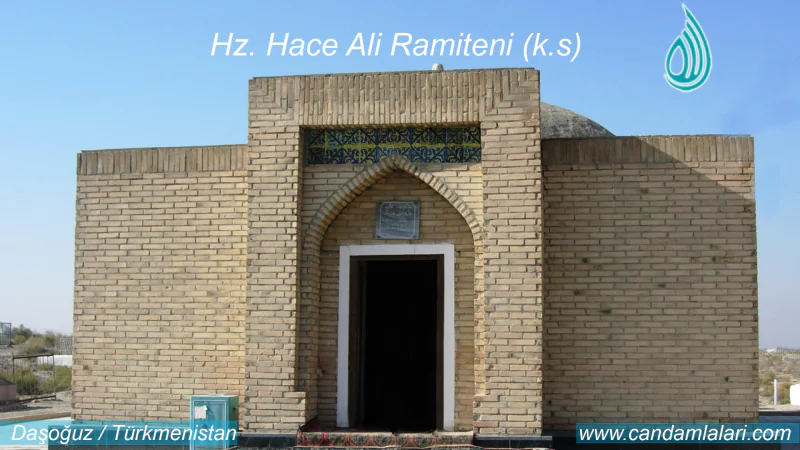
He was born in the month of Muharram in the year 718 AH. Since Hazrat Hoca Ali Ramiteni, famous by the epithet Azizan, passed away in 721, this means he was born during his lifetime. The place where he was born and buried is
the village named «Kasr-ı Ârifan».. The village bearing the name «Kasr-ı Ârifan», meaning the palace of the gnostics, is one league from Bukhara.. From childhood on, the light of belonging to the physical and spiritual lineage of the Messenger of God shone on his face like the radiance of the sun.
His mother relates:
—When my son Bahaeddin was only four years old, he pointed to one of the cattle and said, «That cow of ours with the antlered horns must give birth to a calf with a white blaze on its forehead,» and a few months later the cow gave birth to a calf just as the child had described.
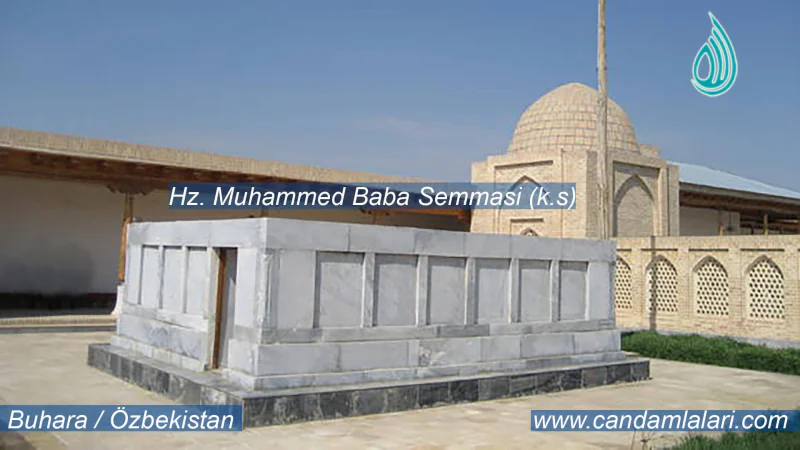
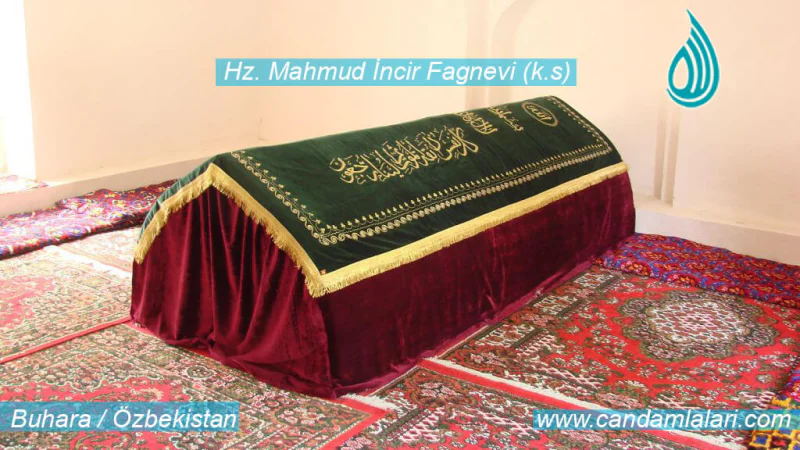
In his childhood Hazrat Hoca was adopted as a son by Hoca Mehmed Baba Semmâsî, and outwardly it was Hoca Emîr Külâl who taught him the courtesies of the tariqa. But in truth and inwardly, Hazrat Hoca is «Uwaysi»; that is, one of those trained by way of spiritual presence. He grew and developed through the spirituality of Hazrat Abdülhâlik Gucdevânî. In the chain of the «Khwajagan», from Hoca Mahmud Encir Fagnevî to Emîr Külâl, the silent dhikr and the audible dhikr were combined. When Hoca Bahaeddin Nakşibend appeared,
the distinction of having been trained by the spirituality of Abdülhâlik Gucdevânî showed itself in him, and Hazrat Hoca gave up the audible dhikr completely and attached himself to the silent dhikr. Indeed, when the audible dhikr began in the assembly of Emîr Külâl, Hazrat
Hoca would leave the circle and go outside, and this weighed very heavily on the other murids.
Hoca Bahaeddin never troubled himself to soothe these feelings of his companions on the tariqa, yet he never showed the slightest neglect in the service of Hazrat Emîr Külâl. And Hazrat Emîr in turn increased his favor and trust toward him at every moment.
One day, in the assembly of Hazrat Emîr, a few of the advanced murids spoke bitterly of Şah-ı Nakşibend's leaving the assemblies during the audible dhikr, and set about accusing Hoca. Hazrat Emîr listened to these accusations and left them unanswered. One day, while a company of some five hundred murids were busy building a mosque in the village of Suhar,
Hazrat Emîr addressed them in a free moment as follows:
—You have formed a bad opinion of my son Bahaeddin and have found fault with him. This state of yours arises from not understanding Bahaeddin. God has a special gaze upon him. The states of servants too depend on this gaze of God. My gaze upon him is not by my own will.
After these words Emîr Külâl called Hazrat
Hoca, who was busy carrying mud-bricks a little further on, to his side and said:
—My son Bahaeddin! I have fulfilled the blessed breaths that Hoca Mehmed Baba Semmâsî entrusted to me for you. Hazrat Semmâsî had commanded me to train you just as he trained me. And I did so.
And pointing to his chest he added:
—I gave you milk until my breasts ran dry. Now the bird of your spirituality has soared beyond the skies of human nature. From now on you have my authorization (ijaza). From whichever direction the fragrance of gnosis reaches your nose, turn that way and ask what you wish!
Hazrat Hoca Bahaeddin says:
—These attentions of Hazrat Emîr became the cause of my trial (ibtila), that is, of my falling into affliction. Had I followed Hazrat Emîr and continued to follow him, I would have been far from affliction and close to safety.
After this tawajjuh, Hazrat Hoca continued for seven years in the suhba of Hazrat Mevlana Arif. Then he reached Halil Ata and was in his suhba for another twelve years. He journeyed twice to the Hijaz, and on the second occasion became a companion of Hoca Mehmed Pârisâ. When they returned to Khorasan, he sent Hoca Mehmed Pârisâ, together with his other followers, toward Nishapur. He himself took the direction of Herat solely for suhba with Mevlânâ Zeynüddin. After three days of suhba with Mevlânâ Zeynüddin, he went again to the Hijaz and from there returned to Nishapur. After staying a while in Merv, he returned to Bukhara and remained there to the end of his life. When Hazrat Emîr Külâl, on his deathbed, instructed those close to him to attach themselves to Hoca Bahaeddin Nakşibend, the murids seemed inclined to object:
— But he, they said, did not follow you in the audible dhikr! Hazrat Emîr answered:
— Every act you see in him is by the decree of God, and his own will has no share in it.
And a line of verse saying that manifestations come from the Truth, one of the famous maxims of the «Khwajagan» path, is this:
— If they bring you into manifestation without yourself in it, without selfhood, do not be afraid; if you appear with your own selfhood, be afraid!
In Bukhara a man named Sheikh Nureddin Halveti passes away. Hazrat Hoca Bahaeddin is among those who go to offer condolences. The household of the deceased and some of the mourners are wailing and crying out loudly. Some find this unseemly and try to prevent it. Then
Hazrat Hoca says:
—When my life too comes to its end and the time to depart from the world arrives, I will teach the dervishes how to die.
Mevlânâ Miskin, who relates this event, continues:
—This word never left my mind until Hazrat Hoca's final illness. Then Hazrat Hoca withdrew into a caravanserai cell and remained there until his last moments. His relatives and followers came to visit him every day. He showed each of them a distinct tenderness and favor. At the last breath he raised his hands in prayer and waited a long time. Then he passed his hands over his face and departed from the world.
Hoca Alâeddin Gucdevânî relates:
—I was with Hazrat Hoca in his last illness; he was at the point of death. When he saw me he commanded: «Alâ, bring the table at once and eat!» He used to address me as «Alâ.» To obey his command I brought the food and took two or three mouthfuls. How could I eat in that state and before that sight? I removed the table. He at once opened his eyes and saw that I had removed the table, and ordered me again to eat. This situation was repeated four times. At that time the one matter occupying the minds of the murids was to whom Hazrat Hoca would entrust the training of the murids after him. Hazrat Hoca answered this question that was passing through everyone's heart: «Why do you trouble me at such a time? What you want is not in my hands.» It is in the decree of God. When God wishes to honor you with what you want, He gives the command. One of his relatives who attended Hazrat Hoca's service, Hoca Ali Damad, relates:
—In his final illness he commanded me to dig his blessed grave. After carrying out his command I came into his presence and began to think inwardly to whom we would cling after him. Suddenly he raised his head and said: «The word is the one I spoke on the road to the Hijaz. Whoever wants us, let him look to Hoca Mehmed Pârisâ!» And on the second day after saying this, he migrated to the world of eternity (baqa).
Hazrat Alâeddin Attar:
—At the time of Hazrat Hoca's passing, we were reciting Yasin. When we reached the middle of the surah, light began to appear. While he was occupied with the Word of Tawhid, his breath stopped; his passing was just as he had completed 73 years and stepped into the 74th. The date of his death is the night of Monday, 3 Rabi' al-awwal of the Hijri year 791. The chronogram of his death is «Kasr-ı Ârifan», his place of birth.
Translation of one of the chronograms composed:
Şah-ı Nakşibend has gone, the teacher of religion and the world;
He who opened to the people the road of religion and of state.
His nest and lodging had been «Kasr-ı Ârifan»;
At his death, the date of his death again became «Kasr-ı Ârifan».
The most eminent of the khalifas of Şah-ı Nakşibend are Hazrat Alâeddin Attar and Hazrat Hoca
Muhammed Pârisâ.
Category: The Noble Chain